
Mauro Javier Cardenas (whose story “Dora and Her Dog” was published in Issue No. 104) is the author of the new novel The Revolutionaries Try Again (Coffee House Press). Harper’s Magazine has described his first novel as “a high-octane, high-modernist” work “from the gifted, fleet Mauro Javier Cardenas.” And in its starred review, Publishers Weekly said “Cardenas dizzyingly leaps from character to character, from street protests to swanky soirees, and from lengthy uninterrupted interior monologues to rapid-fire dialogues and freewheeling satirical radio programs, resulting in extended passages of brilliance.” Cardenas spoke to ZYZZYVA Managing Editor Oscar Villalon about his book at […]
‘Divination’ by Ann Cummins, ZYZZYVA No. 107, Fall Issue
by me
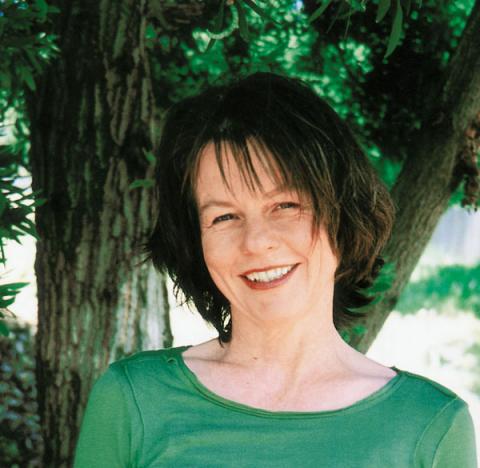 Ann Cummins is the author of the story collection Red Ant House (2003) and the novel Yellowcake (2007). A former Lannan fellow, her work has been published in The New Yorker and McSweeney’s and in Best American Short Stories 2002.
Her story “Divination” is set in the Southwest region in which Cummins was born, but takes place in a distant era, one that places the narrative in the category we would call a Western (and as anybody who has read Stegner, Cather, McCarthy, or Oakley Hall knows, what a wide and rich category it is). A story about the uncompromising realities of family and laboring from the land, “Divination” is another welcome example of Cummins artistry. The following is an excerpt from her story. It can be read in its entirety in Issue No. 107, which you can order here.
[…]
In Conversation with Geoffrey and Tobias Wolff, ZYZZYVA No. 107, Fall Issue
by me
 The following is the introduction from a conversation between our contributing editor Andrew Foster Altschul and Geoffrey and Tobias Wolff. You can read an excerpt of their conversation following the introduction, and, of course, can read the conversation in its entirety in Issue No. 107, which you can buy here.
It’s hard to think of a pair of writer-siblings as celebrated, or as prolific, as Geoffrey and Tobias Wolff. Between them, they’ve written nineteen books, including novels, short-story and essay collections, and a travel narrative. But it was their acclaimed memoirs Geoffrey’s The Duke of Deception (1979) and Tobias’s This Boy’s Life (1989)—that first earned them wide readerships. The brothers’ parents split up when Geoffrey was twelve and Tobias was five, and they grew up separately: Geoffrey with their father and Tobias with their mother. The memoirs deal with their unusual childhoods, from perspectives that overlap only occasionally—the brothers did not really get to know each other until they were young adults. Over their careers, both have won numerous accolades and have risen to positions of prominence in academia—Geoffrey as the director of the graduate writing program at the University of California at Irvine, Tobias as professor of English at Stanford University. I am one of only a few writers lucky enough to have studied with both Wolffs. In 2012, I invited them to the Center for Literary Arts at San Jose State University for a public conversation about memory, family, and the precarious art of writing one’s own life.
[…]
A Valley of Phantoms: ‘Angel of Oblivion’ by Maja Haderlap
by Devan Brettkelly
In her novel Angel of Oblivion (289 page; Archipelago Books), Maja Haderlap depicts a dilapidated, Slovenian-speaking valley in Austria following World War II. During the war, the Nazis identified this area in the south of the country as one riddled with partisans. Many were hunted down and killed, while others were taken away to the camps. (Among the survivors, it is debatable which fate was worse.) Now it’s the 1960s, and fragmented families people the valley, farmers who repeat the stories of their neighbors’ and kins’ annihilations like chants. Haderlap’s story focuses on one particular group of survivors, the Zdravkos, […]
The Opportunity to Understand What’s Different: Q&A with Christine Sneed
by Paul Wilner
Over the course of a relatively short but extremely productive literary career, Christine Sneed has already achieved a substantial, and enviable, body of work. Her first story collection, 2009’s Portraits of a Few of the People I’ve Made Cry, was awarded the AWP Grace Paley Prize and long listed for the Frank O’Connor International Short Story prize. Both for its attention to detail, and its close, caring, but unsentimental attention to the complicated lives of women (and men), Portraits is in Paley’s spirit at the same time as it honors the tradition of what O’Connor called “the lonely voice’’ that […]
An Era, and Its People, Shaped by a Plague: ‘Christodora’ by Tim Murphy
by Ismail Muhammad
Tim Murphy’s latest novel, Christodora (432 pages; Grove Press), arrives in the middle of a cultural yearning for the seedier, more affordable, which is to say “idealized” Manhattan of yesteryear. Novels like Garth Risk Hallberg’s City on Fire and television shows like Netflix’s The Get Down have embraced nostalgia for the cultural ferment of New York City in the ’70s and ’80s, its sense of an expansive and generative squalor. Superficially, Christodora bears this same stamp. Titled after a run-down East Village apartment complex two of Murphy’s protagonists buy for dirt cheap, the novel lovingly renders New York at its […]
‘Conjectures Based on What You Know About Yourself’: Q&A with Chelsea Martin
by Zack Ravas
“Being unemployed feels like being in The Sims’ Build Mode, but with less soothing music.” So declares the nameless narrator at the heart of Mickey (200 pages; Curbside Splendor), the new book from Chelsea Martin. As Mickey opens, its main character – a struggling young artist – impulsively breaks up with her long-term boyfriend and is soon fired from her job. These events springboard our hapless protagonist into ruminations on grand existential concerns like the struggle to pay rent, the inherent loneliness of the human condition, and why cheese and crackers are so damn important at gallery showings. Mickey is […]
In the Fall Issue
by ZYZZYVA
Our Fall issue, replete with fiction, nonfiction, and poetry: A wide-ranging and revealing conversation between Andrew Foster Altschul and Geoffrey and Tobias Wolff, on writing, memory, and the craft of memoir. Lori Ostlund’s “A Little Customer Service”: A waitress questions the value of services rendered when she finds herself in the bed—and the distressed home—of a rich, carefree customer. Ann Cummin’s “Divination”: The burden of a brother toiling the land, serving his no-account father. Adrienne Celt’s “Big Boss Bitch”: They were certain they’d found the perfect female candidate for president. Then she started thinking on her own. Mark Chiusano’s “The […]
A Reading List for These Dark Times
by me
When Donald Trump announced his campaign for the Republican presidential nomination last June, the whole production had a farcical air. The surreal sight of his too-long descent down an escalator, magnified by the hired actors awkwardly cheering him on the entire way, elicited ridicule. His baldly racist nativism was beyond the pale even for dog-whistle Republican politics, and immediately earned him the ire of the GOP establishment. His speech, generally incoherent even as it gave voice to legitimate grievances, didn’t do him any favors; if he couldn’t even articulate a platform, how was he going to run a serious campaign? Pundits […]
Obsessions: Angel Olsen
by Danielle Truppi
“Obsessions” is our web-only essay series that asks emerging West Coast writers to examine the books, poems, songs, television shows, images, or whatever else that has been dominating their attentions lately. We continue with a piece on musician Angel Olsen by Danielle Truppi. Truppi is pursuing an MFA in Fiction at San Francisco State University and has written for Write Club SF and Oatmeal Magazine. She is currently working on a series of stories about insects. Angel Olsen tried to put the radio show host at ease. She told NPR’s Bob Boilen that her new song “Intern” is “such a lie,” that her […]
‘We Can Work Harder to Mourn’: Q&A with ‘Grief Is the Thing …’ Author Max Porter
by Ismail Muhammad
Max Porter’s experimental novel Grief Is the Thing with Feathers (128 pages; Graywolf) follows a father and his two sons as they come to grips with their wife and mother’s sudden death. They do so with the help of an unusual houseguest: Crow, an anthropomorphic projection of the father’s obsession with Ted Hughes’ 1970 poetry collection Crow. Part mythic trickster, part grief counselor, Crow leads the family through an idiosyncratic and irreverent mourning. His air of mischievousness colors the entire novel, lending it a kaleidoscopic tone that renders the mourning process unrecognizable. For Porter, who works as an editor at […]
Obsessions: ‘Liked to Date: 2,836 Posts’
by Shokoofeh Rajabzadeh
“Obsessions” is our web-only essay series that asks emerging West Coast writers to examine the books, poems, songs, television shows, images, or whatever else that has been dominating their attentions lately. We begin with “Liked to Date: 2,836 Posts,” a piece from Shokoofeh Rajabzadeh, a Ph.D. candidate in English Language & Literature at the University of California at Berkeley. Rajabzadeh’s poetry has appeared in Poetry Northwest and Modern Poetry in Translation, and she is currently working on a series of essays about immigrating to the United States and growing up Muslim, post-9/11. She’s closed her Instagram account again. I’ve checked three times […]