
Our Winter issue features fiction, nonfiction, and poetry: “Throwback Thursday” by Joshua Mohr: online, it’s the appearance of happiness that matters most. “Revision” by Mar Colón-Margolies: on assignment covering Texas’s abortion laws, a journalist considers the line between his humanity and his profession. “Wild Kingdom” and “World Away” by Octavio Solis: the tenacity of adolescent memories reveal themselves in a father’s explosive anger and in a school production of “The Diary of Anne Frank.” “Operator, Information” by Glen David Gold: picking up from Issue No. 100’s “The Plush Cocoon,” we offer another installment from Gold’s forthcoming three-volume memoir. “Flood Control,” […]
Category: News
ZYZZYVA news.
Where to Donate Your Abilities: A Sampling of Bay Area Community Organizations
by Caille Millner & Mauro Javier Cardenas
These are difficult days for writers, editors, teachers, and intellectuals of all kinds. Faced with fresh evidence of Auden’s claim that “poetry does nothing,” in the persona of President-elect Donald Trump, the temptation we face is to turn toward despair and disengagement. Yet this is the time we were made for. Now we must help each other to find our voices in the public sphere. What we’ve found to be helpful is combining our abilities—as storytellers, witnesses, and listeners—with a community commitment. The Bay Area has a surfeit of both literary talent and social justice work. The local organizations we’ve […]
Solidarity: A Letter from the Editors
by me
Friends, In general, we keep partisanship and day-to-day politics out of the journal. We hope we can provide a space for thoughtful contemplation of all aspects of contemporary life through art—a way of thinking which, while engaged with the political, is not political in its mode and does its work well outside the 24-hour news-cycle. But we are now compelled to speak to you directly about this election. On November 8, this nation succumbed to the greatest threat that faces any democracy: that a sizable number of its people may find democracy itself—with all its imperfections—too unpalatable, and choose instead […]
Finding in Music What Language Lacks: ‘A Greater Music’ by Bae Suah
by John Gibbs
Communication, or a lack thereof, is front and center in A Greater Music, (128 pages; Open Letter Books; translated by Deborah Smith) Bae Suah’s latest novel to come out in English. Our music-loving narrator is an unnamed Korean woman living on and off in Berlin and Korea, struggling to learn German. Her difficulties in the structure and rigor of academia are documented throughout, up until she meets M, an unconventional tutor who teaches with wild disregard of basic grammar and syntax in favor of a higher learning and exchange of ideas. Presented near the novel’s conclusion is their initial meeting. […]
What’s There to Be Afraid Of?: Some Long-Lasting Works of Horror
by ZYZZYVA Staff
When my best friend read Charles Burns’s graphic novel Black Hole at age eleven, her parents assumed it was a harmless comic book. They were sorely mistaken, and, in her own words, Black Hole messed her up. How bad could it be,? I thought, flipping through the weighty twelve-issue collection. Black Hole is set in Seattle during the mid-1970s, when a horrific STD plagues a small suburb. Only teenagers can contract “the bug,” and like the AIDS epidemic, the town is initially unsure of how it spreads. The disease manifests itself in a variety of disturbing ways. Adolescence is already […]
Hanging in the Balance, Like a Puppet on a Hand: Bob Dylan and the Nobel Prize
by Paul Wilner
“This is really a drag—and a bore,’’ the doomed jazzster Chet Baker tells director Bruce Weber in Let’s Get Lost, in response to (sympathetic) inquiries about his drug habits. The same could be said of the recent controversy over the decision to award the Nobel Prize in Literature to Bob Dylan. In a certain sense, it all makes sense: the high-minded indignation from select members of the literary Establishment (though, some, like Salman Rushdie and Joyce Carol Oates, welcomed the decision), and disgusted repudiation of boomer nostalgia (we get it, Irvine Welsh) in other quarters. It’s of a piece with the kind […]
Resisting Easy Definition: ‘My Private Property’ by Mary Ruefle
by Meryl Natchez
…there is the poem as a unit-like thing, and then there is the poem that pervades existence, which is much more like the wind, and that is the poem everyone senses from time to time, whether they can read or not, whether they ‘care’ about the unit-like thing or not.—Mary Ruefle, from a 2013 interview with Andrew David King in Kenyon Review It’s hard to define a poem these days. But whether you call the short pieces in Mary Ruefle’s new book, My Private Property (128 pages; Wave Books), poetry or prose poems or essays or flash fiction or mediations or whatever, […]
Obsessions: Wish List
by Vanessa Martini
“Obsessions” is our web-only essay series that asks emerging West Coast writers to examine the books, poems, songs, television shows, images, or whatever else that has been dominating their attentions lately. We continue with this piece by Vanessa Martini. Martini is a bookseller at City Lights Books. She lives in San Francisco. My saved eBay, Etsy, and Craigslist searches, with commentary on what late capitalism’s insidious grasp makes me believe each item will do for my life or say about it: Honda CB450 Four If I get this it means at some point I actually got my driver’s license, which means […]
‘Divination’ by Ann Cummins, ZYZZYVA No. 107, Fall Issue
by me
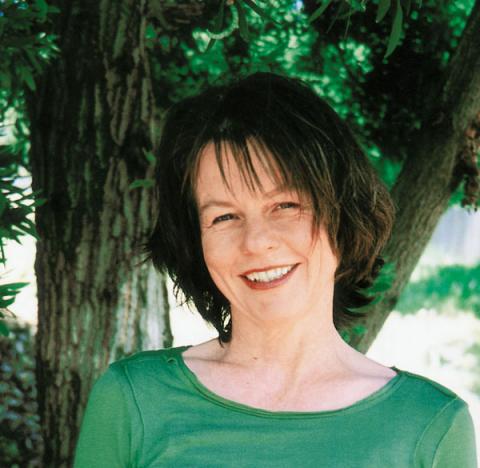 Ann Cummins is the author of the story collection Red Ant House (2003) and the novel Yellowcake (2007). A former Lannan fellow, her work has been published in The New Yorker and McSweeney’s and in Best American Short Stories 2002.
Her story “Divination” is set in the Southwest region in which Cummins was born, but takes place in a distant era, one that places the narrative in the category we would call a Western (and as anybody who has read Stegner, Cather, McCarthy, or Oakley Hall knows, what a wide and rich category it is). A story about the uncompromising realities of family and laboring from the land, “Divination” is another welcome example of Cummins artistry. The following is an excerpt from her story. It can be read in its entirety in Issue No. 107, which you can order here.
[…]
In Conversation with Geoffrey and Tobias Wolff, ZYZZYVA No. 107, Fall Issue
by me
 The following is the introduction from a conversation between our contributing editor Andrew Foster Altschul and Geoffrey and Tobias Wolff. You can read an excerpt of their conversation following the introduction, and, of course, can read the conversation in its entirety in Issue No. 107, which you can buy here.
It’s hard to think of a pair of writer-siblings as celebrated, or as prolific, as Geoffrey and Tobias Wolff. Between them, they’ve written nineteen books, including novels, short-story and essay collections, and a travel narrative. But it was their acclaimed memoirs Geoffrey’s The Duke of Deception (1979) and Tobias’s This Boy’s Life (1989)—that first earned them wide readerships. The brothers’ parents split up when Geoffrey was twelve and Tobias was five, and they grew up separately: Geoffrey with their father and Tobias with their mother. The memoirs deal with their unusual childhoods, from perspectives that overlap only occasionally—the brothers did not really get to know each other until they were young adults. Over their careers, both have won numerous accolades and have risen to positions of prominence in academia—Geoffrey as the director of the graduate writing program at the University of California at Irvine, Tobias as professor of English at Stanford University. I am one of only a few writers lucky enough to have studied with both Wolffs. In 2012, I invited them to the Center for Literary Arts at San Jose State University for a public conversation about memory, family, and the precarious art of writing one’s own life.
[…]
The Opportunity to Understand What’s Different: Q&A with Christine Sneed
by Paul Wilner
Over the course of a relatively short but extremely productive literary career, Christine Sneed has already achieved a substantial, and enviable, body of work. Her first story collection, 2009’s Portraits of a Few of the People I’ve Made Cry, was awarded the AWP Grace Paley Prize and long listed for the Frank O’Connor International Short Story prize. Both for its attention to detail, and its close, caring, but unsentimental attention to the complicated lives of women (and men), Portraits is in Paley’s spirit at the same time as it honors the tradition of what O’Connor called “the lonely voice’’ that […]
An Era, and Its People, Shaped by a Plague: ‘Christodora’ by Tim Murphy
by Ismail Muhammad
Tim Murphy’s latest novel, Christodora (432 pages; Grove Press), arrives in the middle of a cultural yearning for the seedier, more affordable, which is to say “idealized” Manhattan of yesteryear. Novels like Garth Risk Hallberg’s City on Fire and television shows like Netflix’s The Get Down have embraced nostalgia for the cultural ferment of New York City in the ’70s and ’80s, its sense of an expansive and generative squalor. Superficially, Christodora bears this same stamp. Titled after a run-down East Village apartment complex two of Murphy’s protagonists buy for dirt cheap, the novel lovingly renders New York at its […]